In the Age of Monsters: US Hegemonic Decline and Fascism
Rory J on the dying role of the United States and its implications for the world order

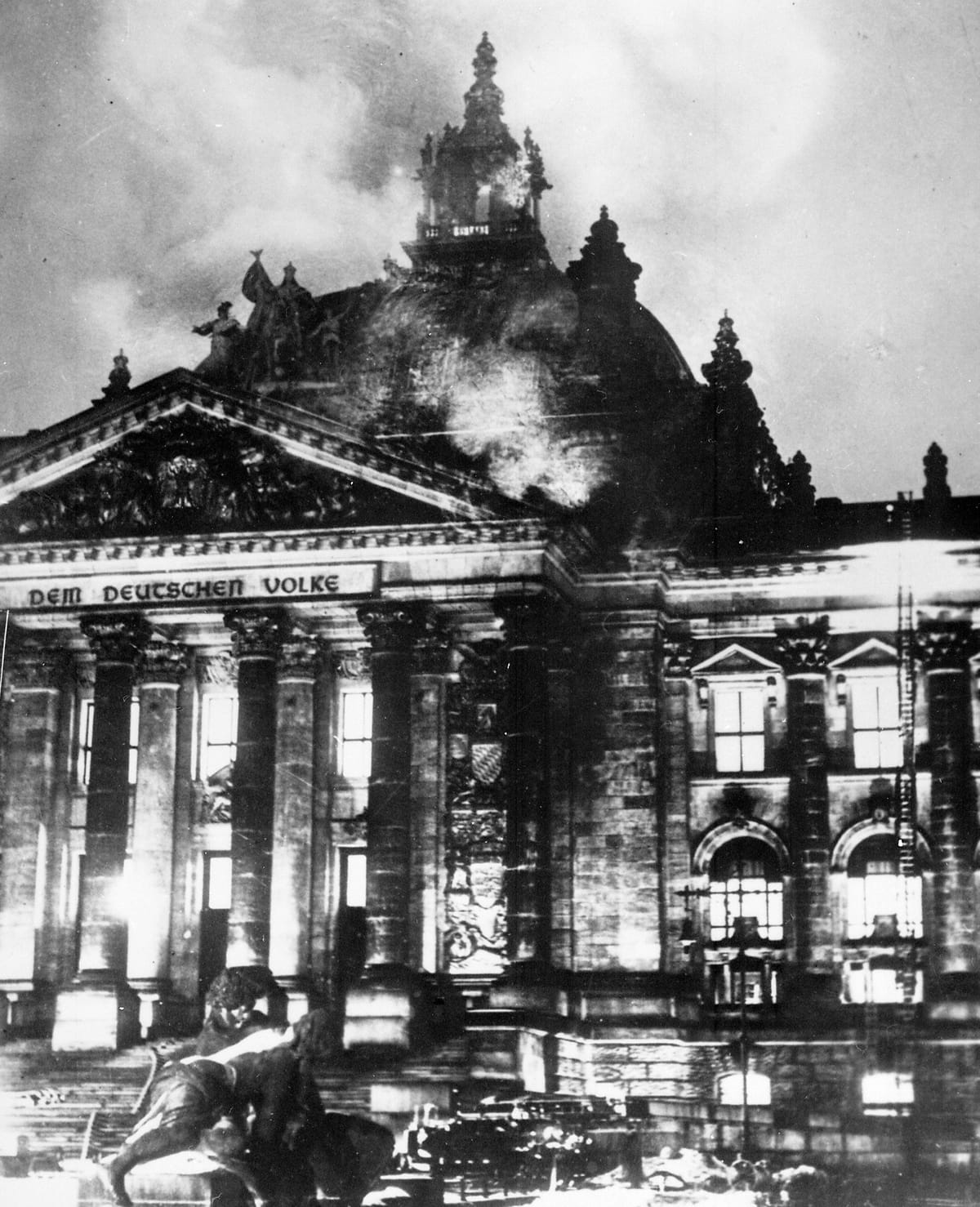
"The old world is dying, and the new world struggles to be born: now is the time of monsters." —Antonio Gramsci
The US is a hegemon in decline. Its global systems that once seemed impervious have embrittled, steadfast alliances have fallen into disarray, and the way of understanding the world that the US put forth is becoming increasingly out of date with the global challenges of the era. And yet, US hegemony shambles on, with no one yet able to kill it or restore it to its halcyon years. The global order; the sprawling financial sector, the complex alliance structures, the cross-country supply lines, all of it continues out of sheer inertia, not out of US leadership. It is only a matter of time before a new world leader emerges, one set to take control of the world stage. It is in this era, the cleft between the old and the new, that fascism emerges.
The US has suffered from "preemptive decline", as its own decline becomes obvious, it takes actions to try and prevent it that only speed up the process. As its diplomatic weight has declined, the US has turned to military solutions to solve its problems. It picks fights with increasingly smaller opponents with decreasingly justified reasons. The number of allies rallying to join these causes has also decreased, with the US becoming more isolationist in turn. Old alliances are called into question, with no new ones to take their place. Protectionist economic policies have taken over policy debates, even with the US being the one who created the global free trade order. Immigration also has become a contentious topic, with the US becoming more jingoistic and nativist. Taken in aggregate, these are all zero sum views. Where it was once possible to believe in a rising tide lifting all ships, the US has chosen to close itself off, and attempt to crush all competition for its own gain. This, of course, only leads to other countries doing the same, and no one winning.
The militarization of a declining hegemon is not limited to just its wars. As the military commitments increase, so does the military spending. The US spends more on maintaining its military might than its economic might. The economy continues on, under invested in and unable to take advantage of future technological innovations. In other countries green energy serves as an economic boon to fuel new development. But the US lags behind, unable to take advantage of the benefits at scale. The military investments continue to suck up top talent, and give them nontransferable skills. New engineers enter the military for the highest pay, and learn skills that don't transfer to the domestic sector. Every dollar invested in the military is not just one that could be invested elsewhere. It is one that directly fuels economic decline. This becomes a vicious cycle, the only place where the US dominates is militarily, so it continues to be the only place the US invests in. Thus, the only tool to resolve global conflict the US has is its military might, which it does not have the economy to maintain.
These trends do not just happen to governments, or to political movements. They seep into our communities, into people themselves.
It is against this backdrop that fascism rises. It promotes an Us vs Them mentality, gives simple solutions, and appeals to nostalgia. As the capacity of the state to solve problems declines, the populace begins seeking answers. The hegemonic ideas are called into question, and certainty gives way to doubt. What is the place of the US in the world? How should the economy be structured? What caused the problems we face, and who is to blame? Fascism seeks to appeal towards former glory. Past greatness can only be recaptured by returning to what made us great, they argue. Problems are blamed on an out group, who came into the country and seek to destroy the in group. Any minority group can be subbed into this role, as long as fascist media can make targets out of them. Internationally, fascist groups struggle to form coalitions. Xenophobia is at the heart of the movement, and yet no country can take on the world alone. Fascist governments must simultaneously seek to close the country off while seeking alliances with other fascist governments. This contrasts the US led hegemonic order, where Western European countries were always considered allies, regardless of who was in charge. This contradiction can be seen in the US's attempts to support the governments of Hungary, and Argentina for ideological reasons.
These trends do not just happen to governments, or to political movements. They seep into our communities, into people themselves. A new form of individualism has taken root in the US, one far more cynical and nihilistic than before. In traditional forms of media, as well as social media, content is focused on appeals to people's base fears. Nihilism about the state of the country has led to many giving up and tuning out. The basic principles of society are forsaken for personal gain. Corporations run ramshackle through the government to make as much profit as possible. Blatant political corruption goes unpunished. On the whole, anyone who recognizes US decline only seeks to pilfer as much of its wealth as possible before its collapse, rather than work towards any solution.
What is the left's response? It tends to lag behind in adaptation to this new style of politics. Out of fear of fascist movements, the left seeks to uphold cordon sanitaire with the center. This, however, ends up as a dead end. The center cannot hold, and a new style of politics is needed to meet the moment. The left must set its own agenda, lay out its own issues, instead of triangulating around the right. The decline of the US is responsible for the political moment we find ourselves in. But the rising tide of fascism is not an inevitable path. Support for the left has also grown in the US, as people seek new answers to new problems. Communities the state has sought to destroy prove more resilient than they thought. The decline of the US has put the world in a shroud of fear, anger, and despair. It is up to us to build a new light out of the darkness.